Share Ward and Representation Review on FacebookShare Ward and Representation Review on X (formerly Twitter)Share Ward and Representation Review on LinkedinEmail Ward and Representation Review link
We are seeking your feedback on how our community is represented on Council to ensure the arrangements continue to meet the needs of our growing and changing community.
We want to hear your views on whether the Shire should retain wards, how wards should be structured, and whether there should be six or eight councillors in addition to the popularly elected Shire President.
The discussion paper presents a range of options for consideration. These are not the only possibilities, and we welcome other ideas.
We encourage you to read the discussion paper, consider the options and tell us which approach you think would best provide fair and effective representation for our community into the future.
Your feedback will help Council decide whether any changes should be proposed to the Shire's ward and representation arrangements.
How to have your say
There are three ways to provide your feedback:
1. Online survey
Complete the survey below to share your views.
2. Email your feedback
Download the survey from the Documents section and complete it. Send your submission to info@sjshire.wa.gov.au.
3. Written submission
Download and print the survey from the Documents section and complete it by hand.
You can then submit it in person or by mail to:
Shire of Serpentine Jarrahdale 6 Paterson Street Mundijong WA
Please include the reference number SJ4830 with all email and written submissions.
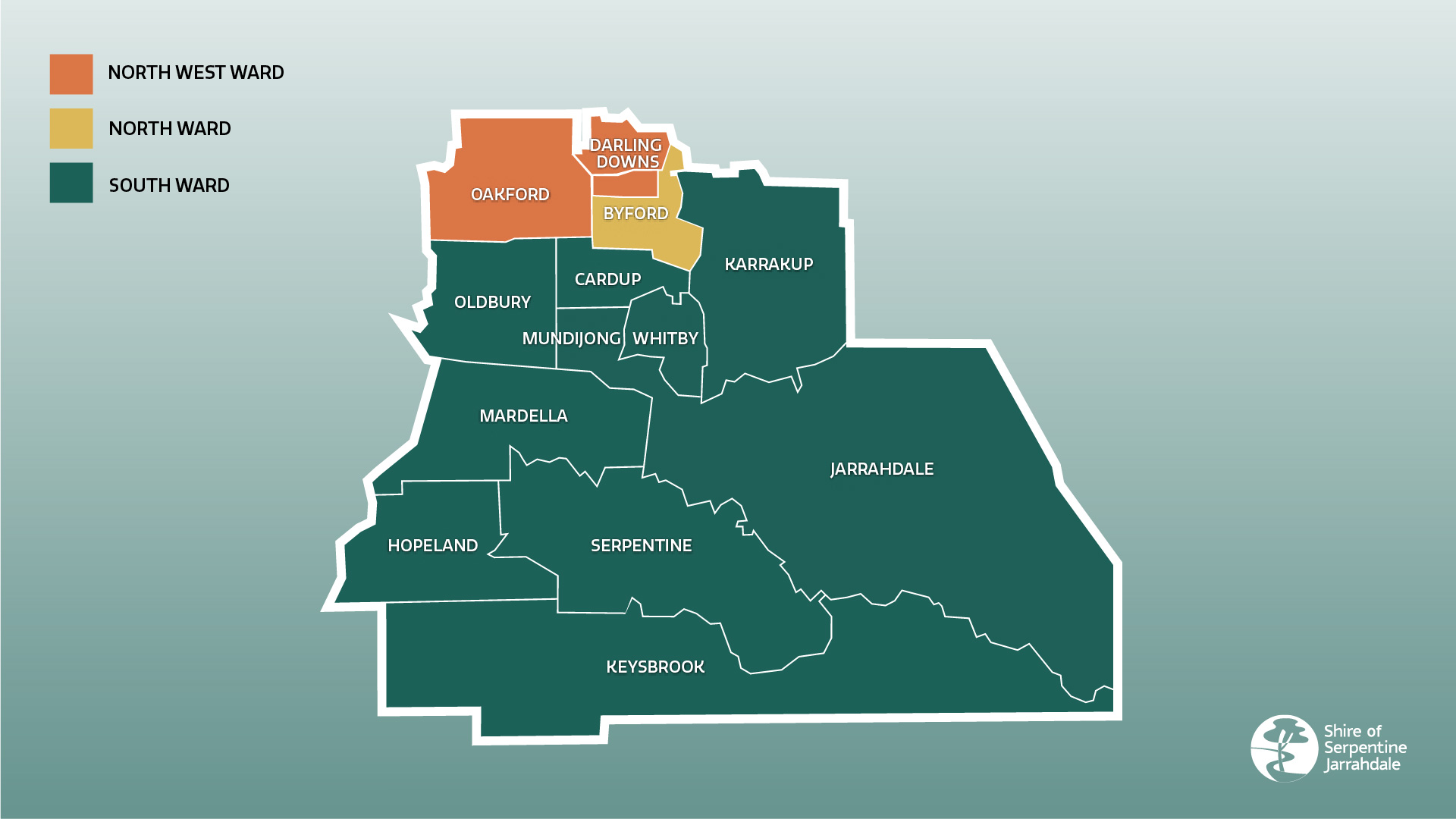
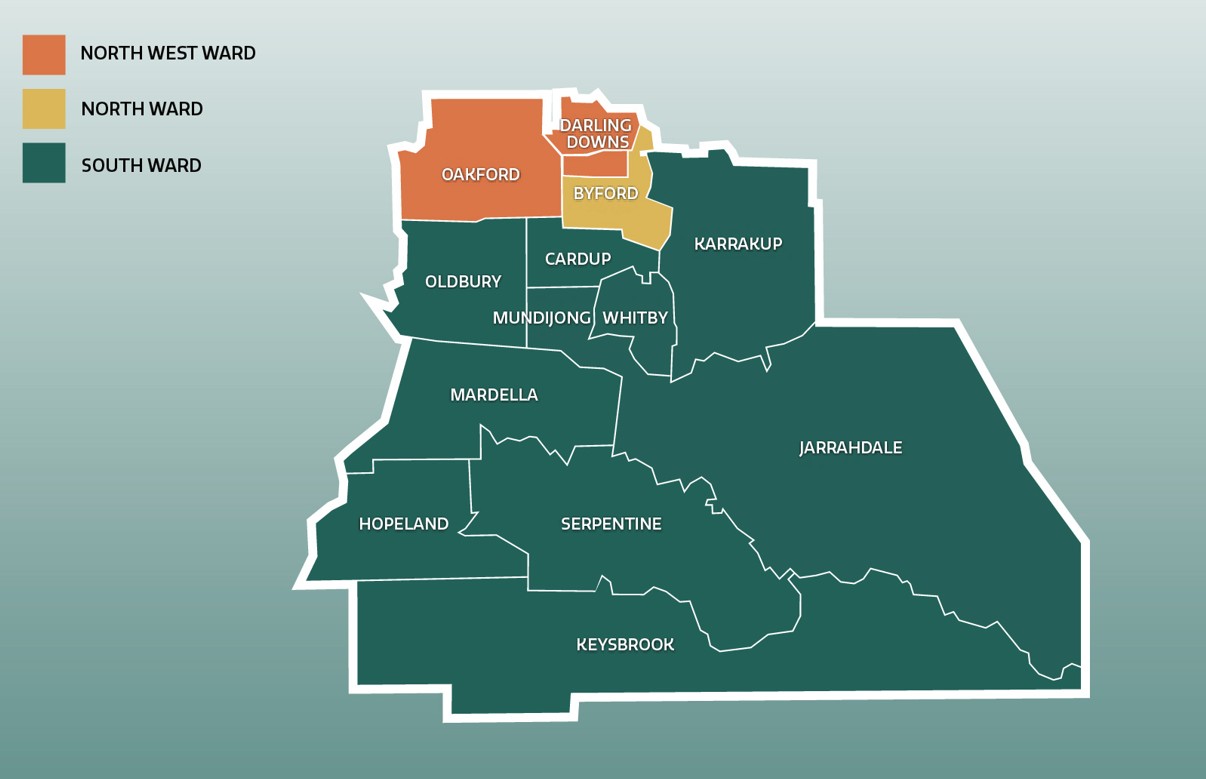
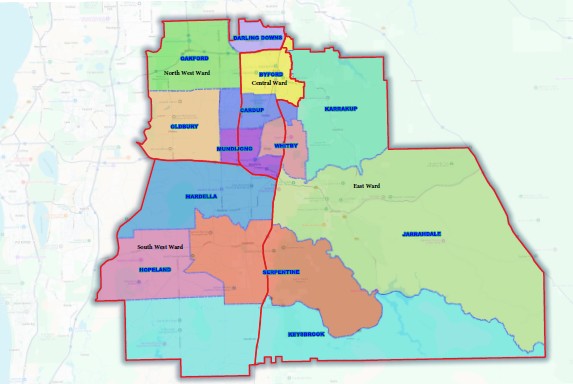
Current ward structure and boundaries:
What are the options?
The Ward and Representation Review – Discussion Paper considers six possible approaches to the Shire's future representation arrangements. The options look at different combinations of ward boundaries, numbers of wards and either six or eight councillors.
There is no preferred option at this stage, and the options are not exhaustive. You can support an option, suggest changes to an option, or propose a different arrangement.
The six options at a glance
Option 1: Keep the current three wards
Keep the existing North, North West and South ward boundaries. The Shire could retain six councillors, with two in each ward, or increase to eight councillors and redistribute the councillor positions between the existing wards to better reflect elector numbers and future growth.
This option provides the greatest continuity, but Byford would remain divided across three wards and differences in representation are expected to increase as growth occurs.
Option 2: Three wards based on whole suburbs
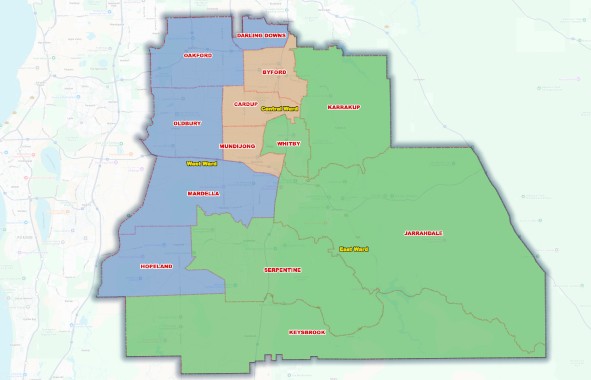
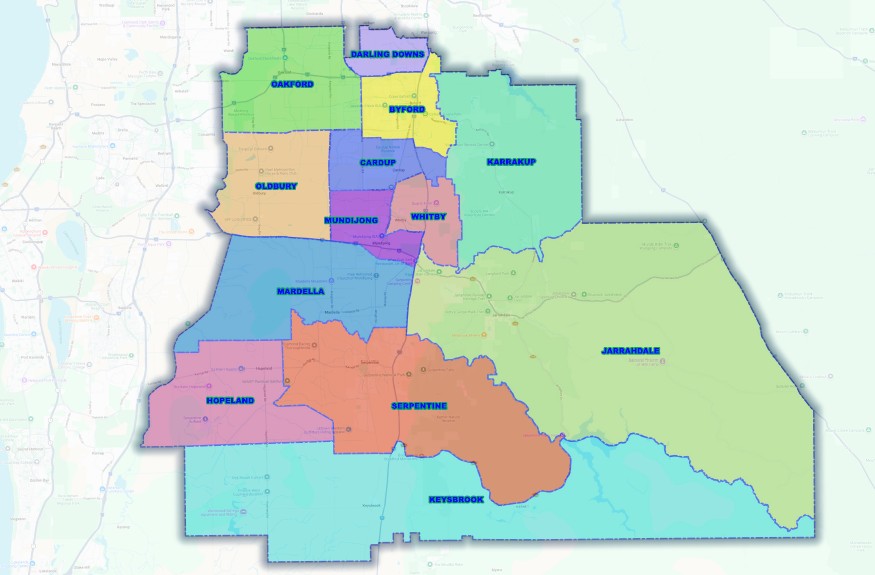
Create new Central, West and East wards using whole suburb boundaries, so individual localities are not divided between wards. The Central Ward would include Byford, Cardup and Mundijong, with the western and eastern communities grouped into separate wards.
This option could have either six councillors (4 Central, 1 West and 1 East) or eight councillors (5 Central, 1 West and 2 East). The six-councillor model provides relatively balanced representation in the earlier years, although the balance changes as different parts of the Shire grow.
Option 3: Three wards using major roads as boundaries
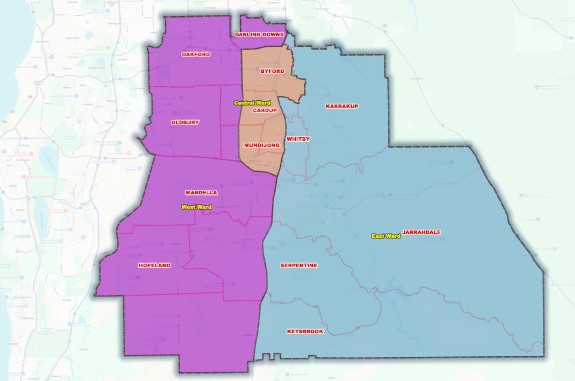
Create revised Central, West and East wards using major features such as Tonkin Highway and South Western Highway as boundaries, with eight councillors: five Central, two West and one East.
This structure seeks to distinguish the Shire's main urban and developing areas from its eastern and western rural areas. The projected representation becomes more balanced over time, although several localities would be divided between wards.
Option 4: Two wards
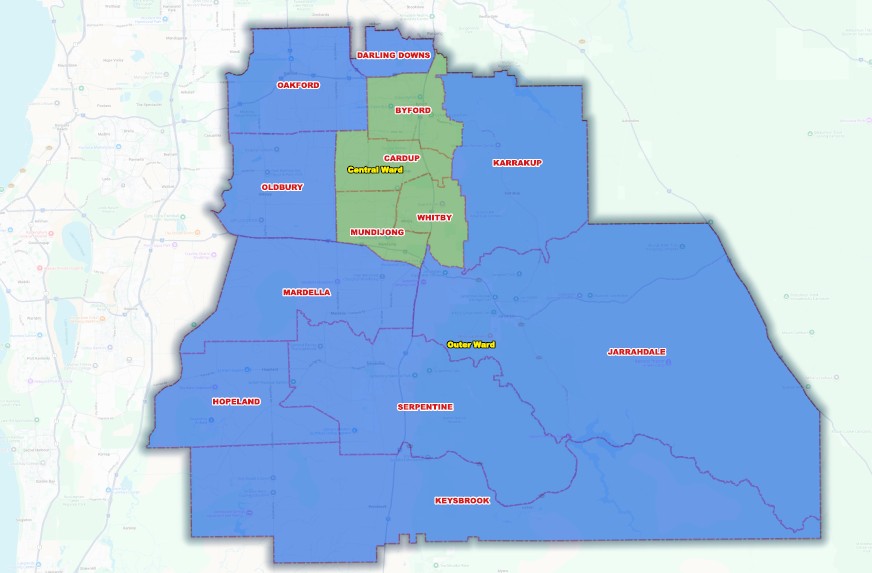
Create a Central Ward containing Byford, Mundijong, Cardup and Whitby, represented by six councillors, and an Outer Ward containing all remaining areas, represented by two councillors.
This option groups the Shire's principal growth areas together while maintaining separate representation for rural and outer communities. The model provides comparatively balanced representation in the short to medium term, although continued growth in the Central Ward means the balance is expected to change over time.
Option 5: Four wards
Create four wards with eight councillors: five representing a Central Ward and one each representing North West, South West and East wards.
This option provides more localised representation for the Shire's rural and outer communities and uses major roads to help define ward boundaries. However, some localities would be divided between wards and differences in growth mean the balance of representation would change over time.
Option 6: No wards
Remove wards altogether, with either six or eight councillors elected by voters across the whole Shire.
Every councillor would represent the whole district rather than a particular geographic area. This removes differences in elector-to-councillor ratios between wards and avoids the need to adjust ward boundaries as growth occurs, but there would no longer be dedicated ward-based representation for particular areas.
Share Ward and Representation Review - Have your say! on FacebookShare Ward and Representation Review - Have your say! on X (formerly Twitter)Share Ward and Representation Review - Have your say! on LinkedinEmail Ward and Representation Review - Have your say! link
Ward and Representation Review is currently at this stage
Tuesday 17 November 2026
This consultation is open for contributions.
Consultation closes
this is an upcoming stage for Ward and Representation Review
Sunday 3 January 2027 at 5:00pm
Contributions to this consultation are closed for evaluation and review. All submissions are being considered against the statutory factors.
Under Review
this is an upcoming stage for Ward and Representation Review
Contributions to this consultation are closed for evaluation and review. All submissions are being considered against the statutory factors.
Decision making
this is an upcoming stage for Ward and Representation Review
A report will be presented to Council to determine whether to retain the current arrangements or recommend change. If change is proposed, a proposal will be submitted to the Local Government Advisory Board for assessment and recommendation to the Minister for Local Government.